
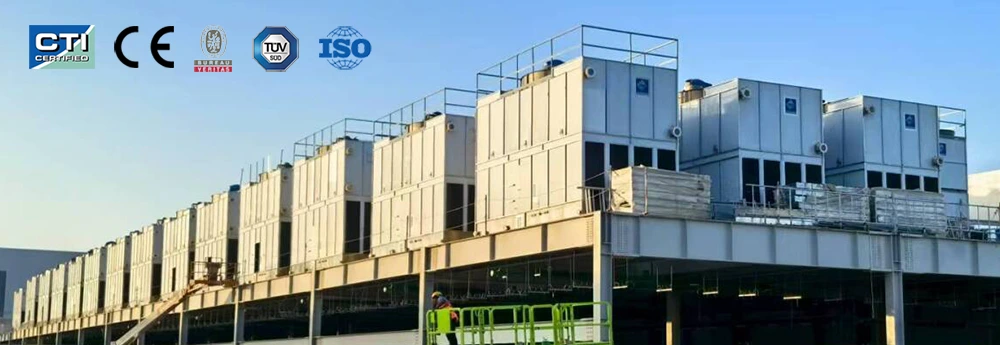
Open Cooling Towers
Open cooling towers provide efficient evaporative heat rejection by bringing circulating water into direct contact with ambient air. HACST supplies counterflow and crossflow configurations selected around flow rate, temperature range, design wet-bulb, water quality, footprint and sound limits.
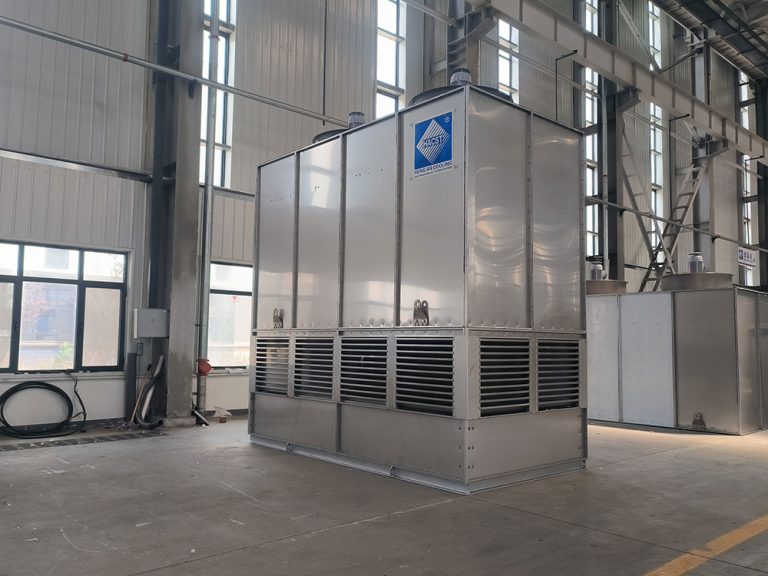
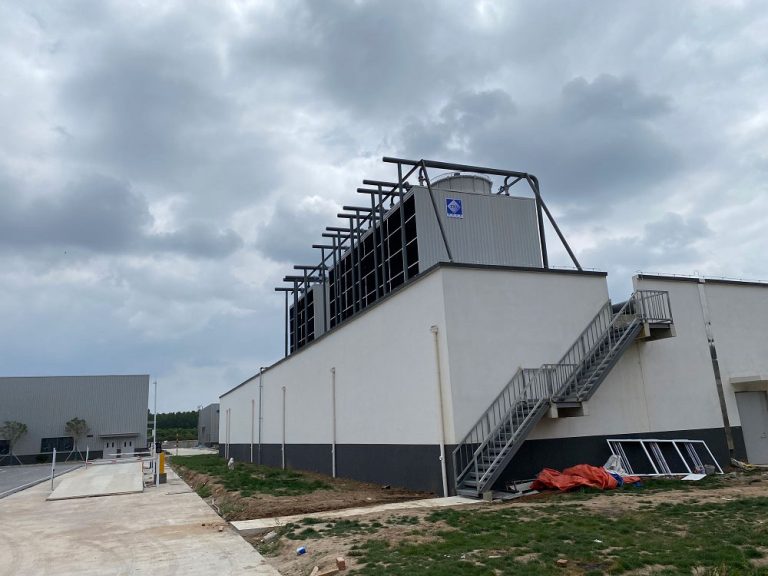

1. What Is an Open Cooling Tower?
An open cooling tower rejects heat through direct contact between warm circulating water and ambient air. Water is distributed across fill media while fans move air through the tower; a small portion evaporates and removes heat from the remaining water before it returns to the system.
Open towers are well suited to HVAC condenser-water systems and industrial processes where high heat-rejection efficiency and economical operation are priorities. Because the circulating water is exposed to the atmosphere, make-up water, filtration, blowdown, scale and corrosion control, biological control and routine maintenance must be included in the operating plan.
2. How It Works
Hot water from the system is pumped to the top of the tower and distributed evenly over the fill media (heat exchange surface). As the water flows downward through the fill, a fan draws ambient air upward or across the tower. A small portion of the water evaporates, absorbing heat from the remaining water and lowering its temperature. The cooled water is then collected in the cold water basin at the bottom and returned to the system.
3. Key Features
- High heat transfer efficiency through direct water-air contact
- Simple structure and relatively low initial cost
- Effective cooling even in high ambient temperatures
- Suitable for large-scale heat rejection
4. Common Applications
Open cooling towers are commonly used in power plants, chemical processing, steel manufacturing, HVAC systems, data centers, and various industrial processes where large volumes of water need to be cooled economically.
While highly efficient and cost-effective, open cooling towers expose the process water to the atmosphere, which may lead to water loss through evaporation and drift, as well as potential scaling, corrosion, and bacterial growth (such as Legionella). Regular water treatment and maintenance are therefore essential.
Crossflow vs Counterflow Open Cooling Towers
Both arrangements use evaporative heat rejection. The best choice depends on site layout, airflow, access, sound, water quality and the required approach temperature.
| Design Consideration | Crossflow | Counterflow |
|---|---|---|
| Air and water path | Air moves horizontally across falling water | Air moves upward against falling water |
| Footprint | Often wider with accessible air inlets | Often more compact for a given duty |
| Water distribution | Gravity distribution is easy to inspect | Pressurized spray distribution supports compact layouts |
| Typical selection driver | Access, low pumping head and site layout | Compact footprint and demanding thermal duty |
Water Quality and Maintenance Planning
- Make-up and blowdown: establish cycles of concentration from the actual water analysis.
- Scale and corrosion: match treatment, materials and operating limits to the water chemistry.
- Biological control: include monitoring, cleaning and an appropriate treatment program.
- Drift and plume: evaluate eliminator performance, neighboring air intakes and local conditions.
- Service access: allow safe inspection of fill, nozzles, basin, fans, motors and eliminators.
Common Open Cooling Tower Applications
Open Cooling Tower FAQ
What is the main advantage of an open cooling tower?
Direct air-water contact provides efficient evaporative heat rejection and can achieve leaving-water temperatures closer to ambient wet-bulb than dry-only equipment.
How is an open cooling tower sized?
Sizing starts with water flow, entering and leaving temperatures, design wet-bulb, altitude and required redundancy. Water quality, sound and footprint then influence configuration and materials.
Does an open tower require water treatment?
Yes. Make-up water, blowdown, scale and corrosion control, biological control and regular inspection are part of reliable operation.
When is a closed circuit tower more suitable?
Consider a closed circuit tower when the process fluid must remain isolated and clean, or when protecting downstream equipment from contamination is a primary requirement.
5. Why Choose HACST?
40+ years of industry experience with strong R&D capability (20+ engineers, 10+ invention patents, cooperation with Shandong University and Xi’an Jiaotong University)
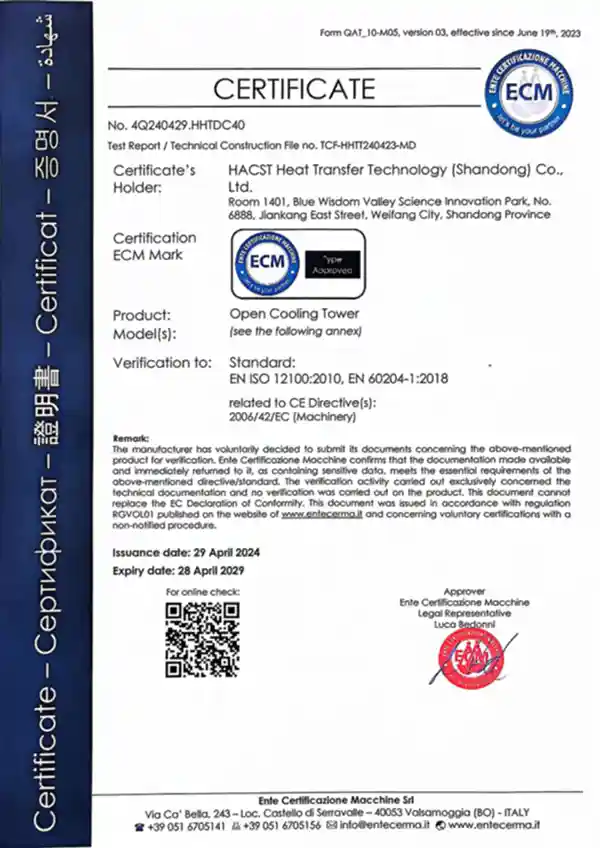
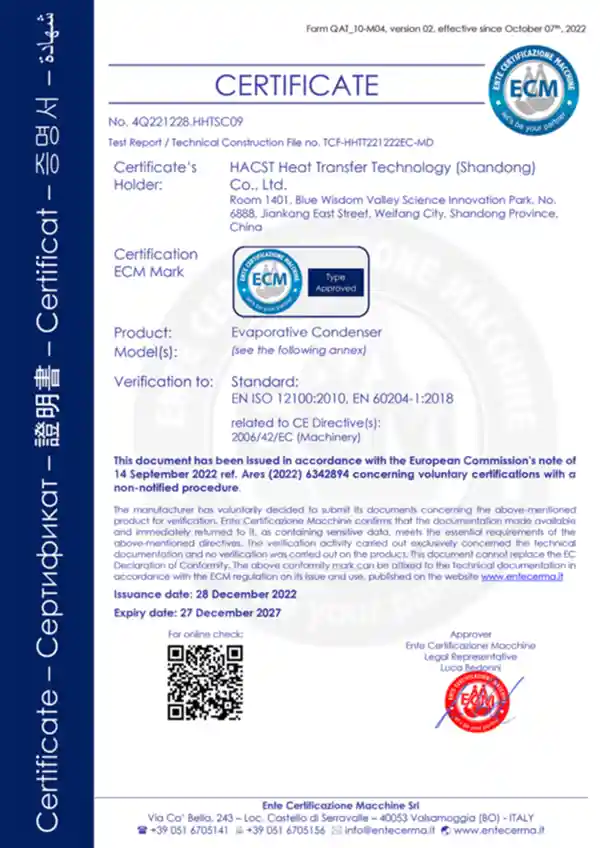
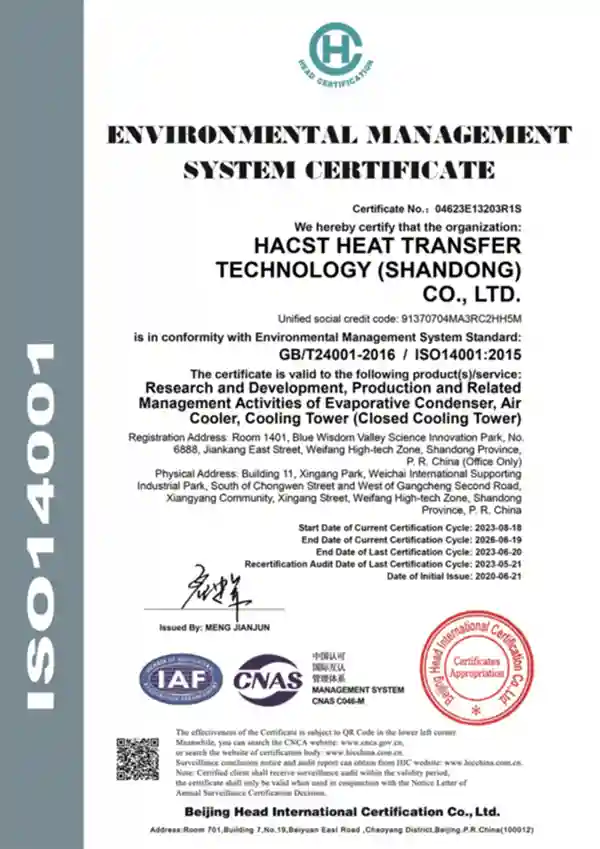
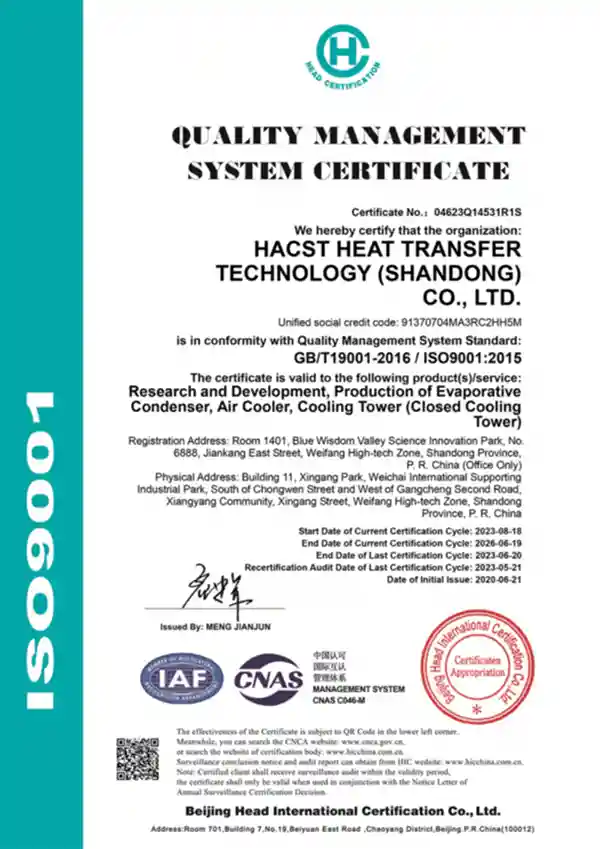
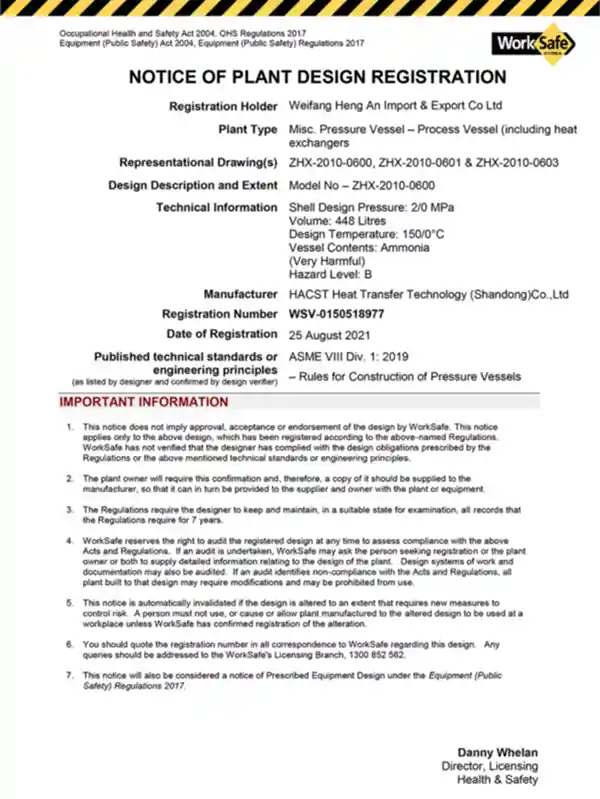
Internationally certified: ISO9001, ISO14001, ISO45001, CTI, CE, TÜV, BV, SGS, AS1210, and more
Professional international trade team of over 40 members, fluent in multiple languages
Full support for standard and highly customized solutions (OEM/ODM)
“HACST” and “Hengan” brands are well-recognized worldwide. Our equipment has been exported to over 100 countries and regions and serves as a trusted partner for global companies such as Coca-Cola, Mayekawa, Emerson, SRF, Hamon, and many others.
With strict quality control and comprehensive after-sales service, we are committed to providing reliable, efficient, and eco-friendly cooling solutions.
Welcome to contact us for inquiries or customized requirements. HACST looks forward to being your long-term partner!
Our Customers

Our Certificates


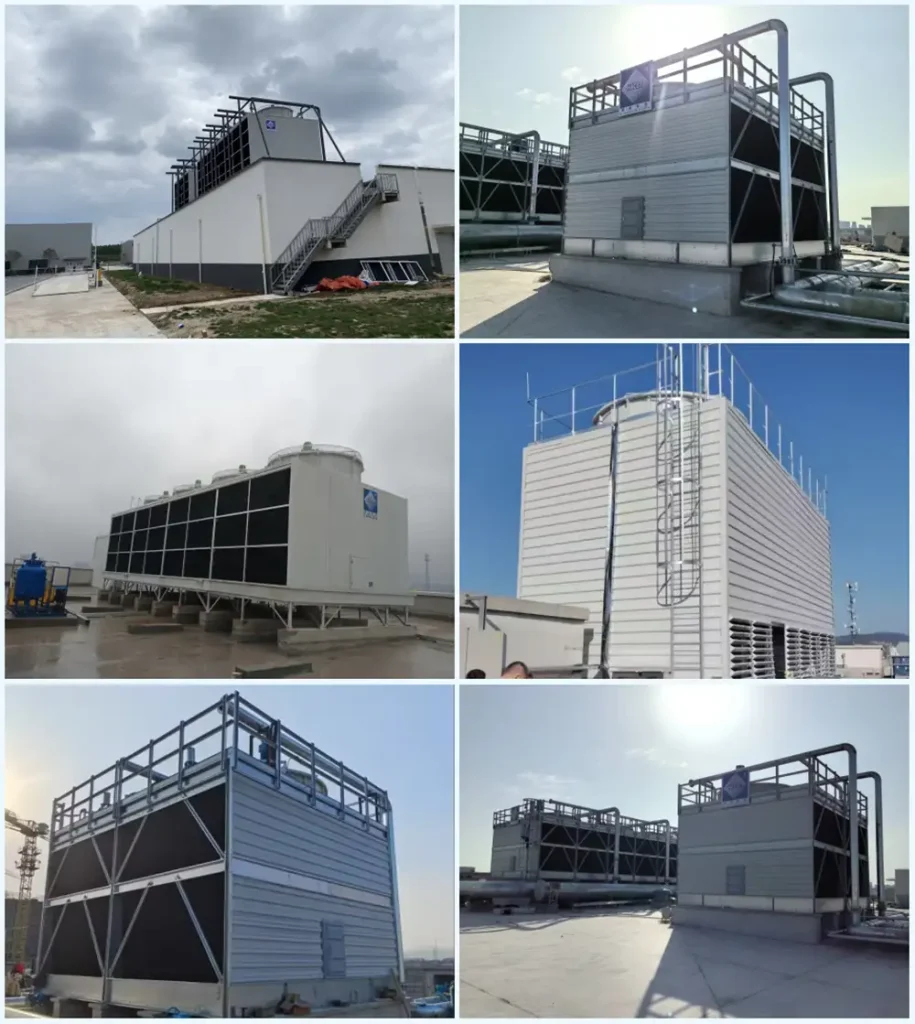
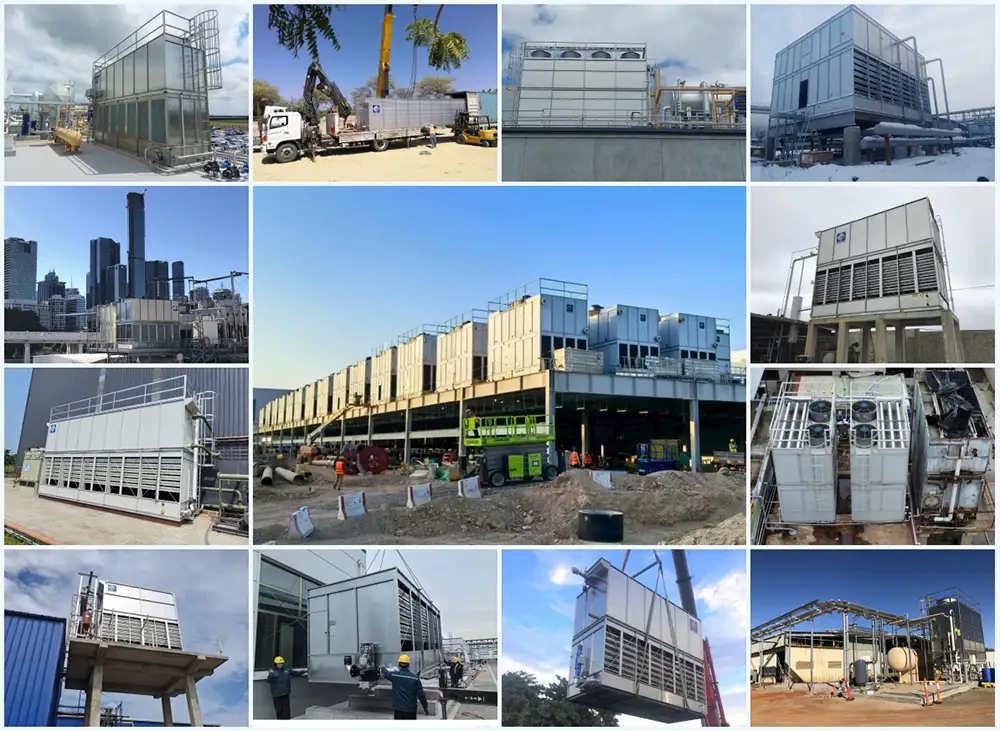
Some of Our Projects
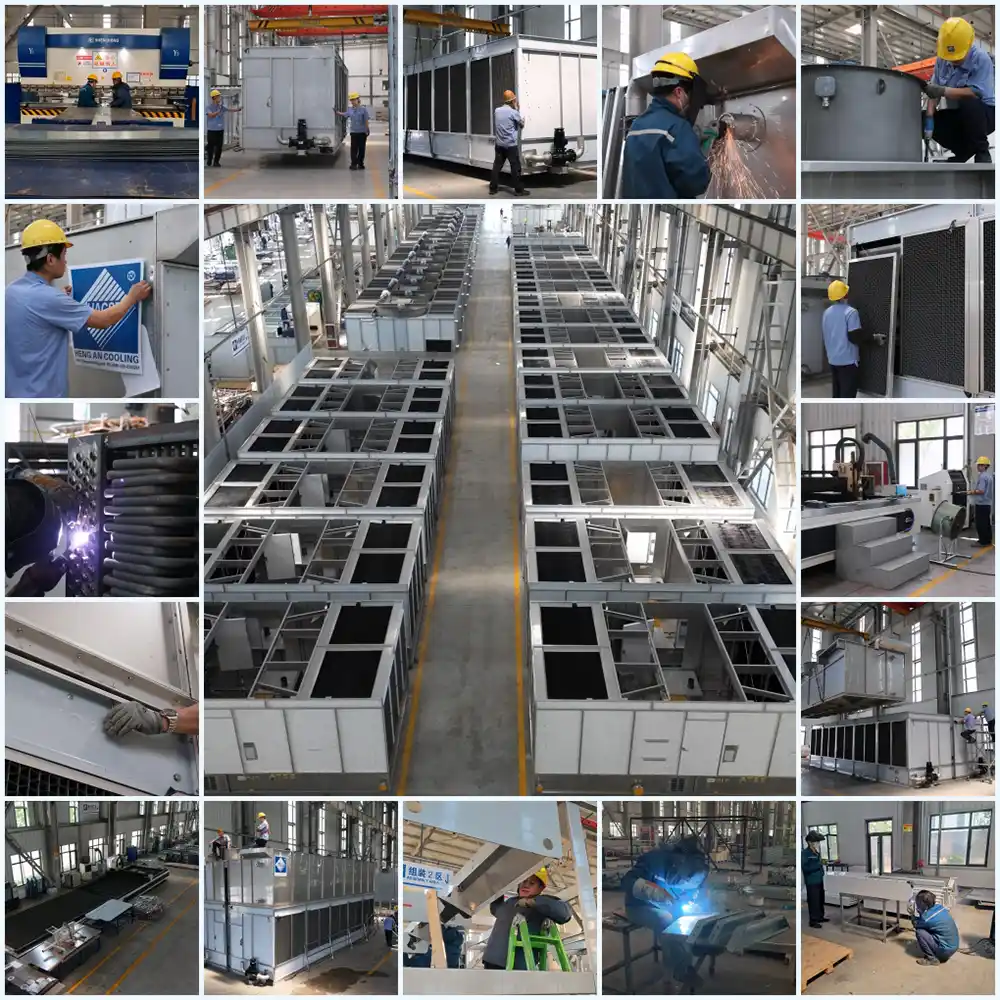
Our Workshop
Need an Open Cooling Tower Selection?
Send water flow, entering and leaving temperatures, design wet-bulb, project location, water analysis, sound limit and redundancy requirements for an engineering review.