Evaporative Condensers
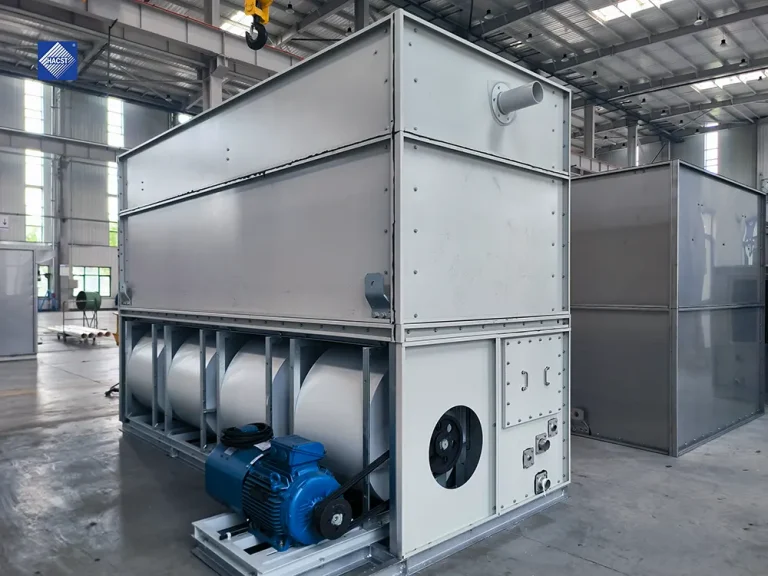
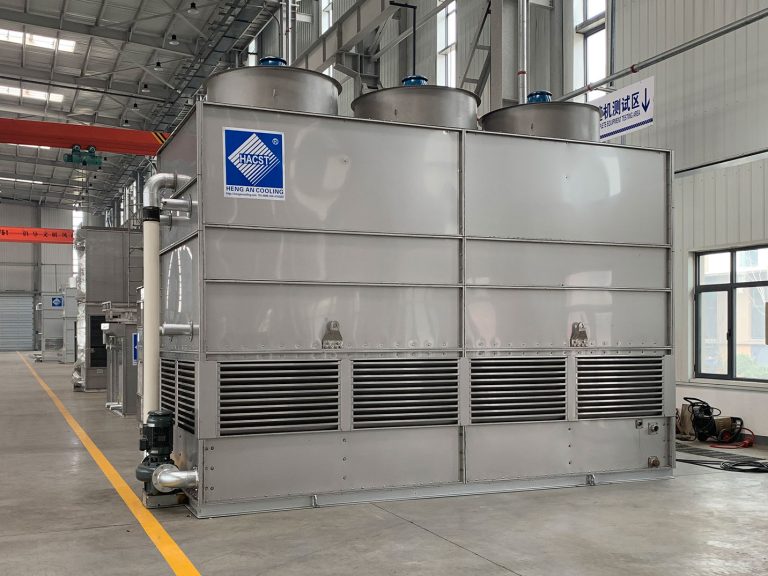
1. What Is an Evaporative Condenser?
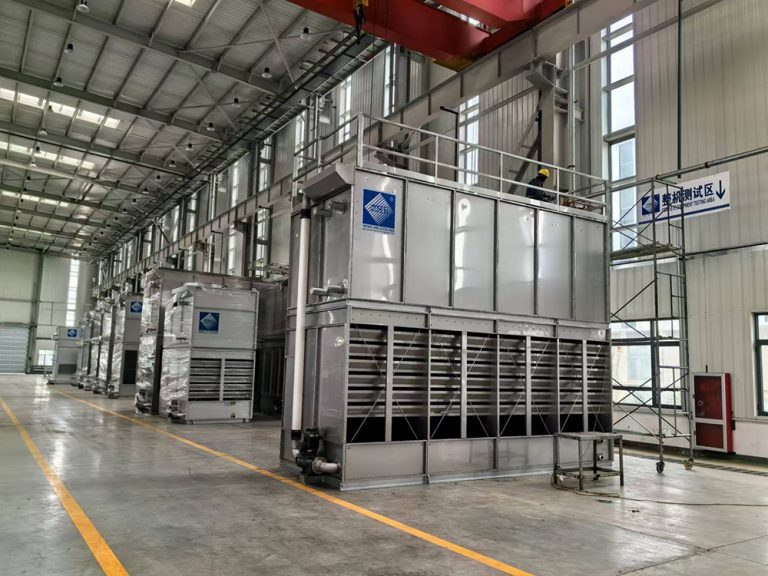
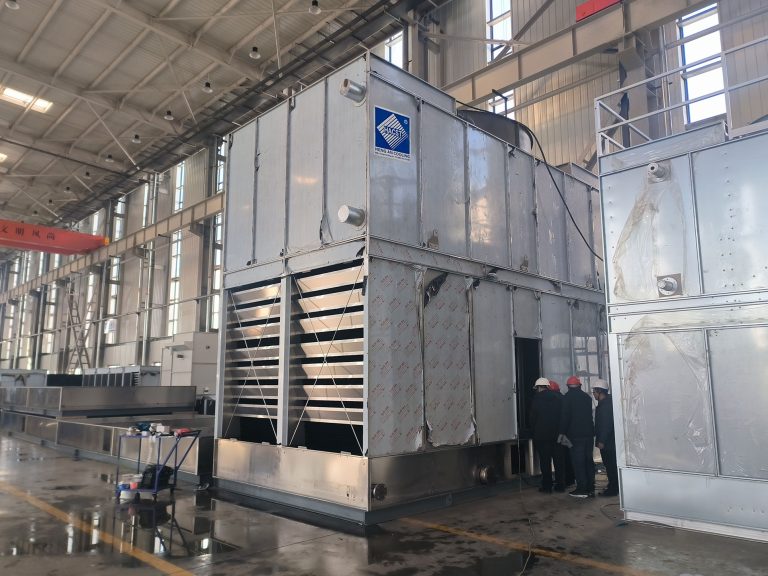
HACST evaporative condensers combine refrigerant condensation and evaporative heat rejection in one compact package for industrial refrigeration. Counterflow, crossflow and combined-flow configurations can be selected for ammonia (NH3), CO2 and other project-specific refrigerants.
Review capacity, refrigerant, design wet-bulb temperature, coil material, sound limits, water treatment and site layout with our engineers before selection.
2. Common Applications of Evaporative Condensers
Evaporative condensers are widely used in various industries where efficient, energy-saving, and reliable heat rejection is required. Key application fields include:
- Industrial Refrigeration — Ideal for cold storage warehouses, freezing plants, and food processing facilities.
- HVAC Systems — Used in large commercial and industrial air conditioning systems.
- Chemical & Petrochemical Industry — For condensing processes in chemical production and refining.
- Power Generation — Auxiliary cooling for turbines and generator sets.
- Pharmaceutical Industry — Meeting strict temperature control and cleanliness requirements.
- Meat, Dairy & Beverage Processing — Ensuring efficient and hygienic refrigeration.
- Data Centers & IT Facilities — Providing high-efficiency cooling for critical equipment.
Thanks to their superior heat transfer efficiency and compact design, evaporative condensers help reduce energy consumption and operating costs while maintaining stable system performance in demanding industrial environments.
3、Why Choose HACST?
40+ years of industry experience with strong R&D capability (20+ engineers, 10+ invention patents, cooperation with Shandong University and Xi’an Jiaotong University)
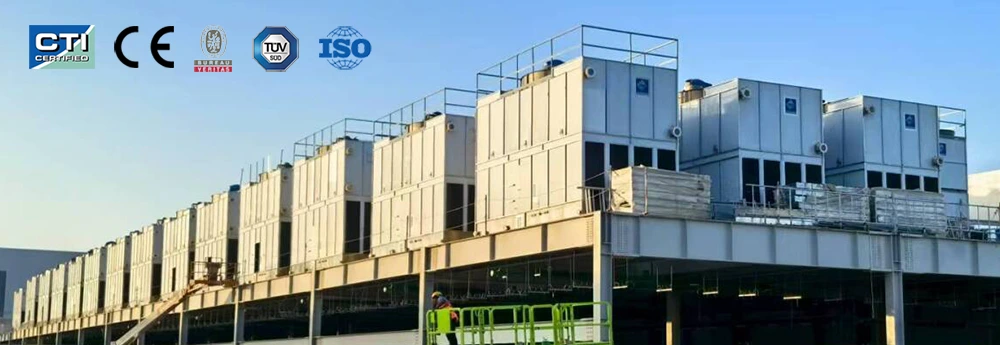
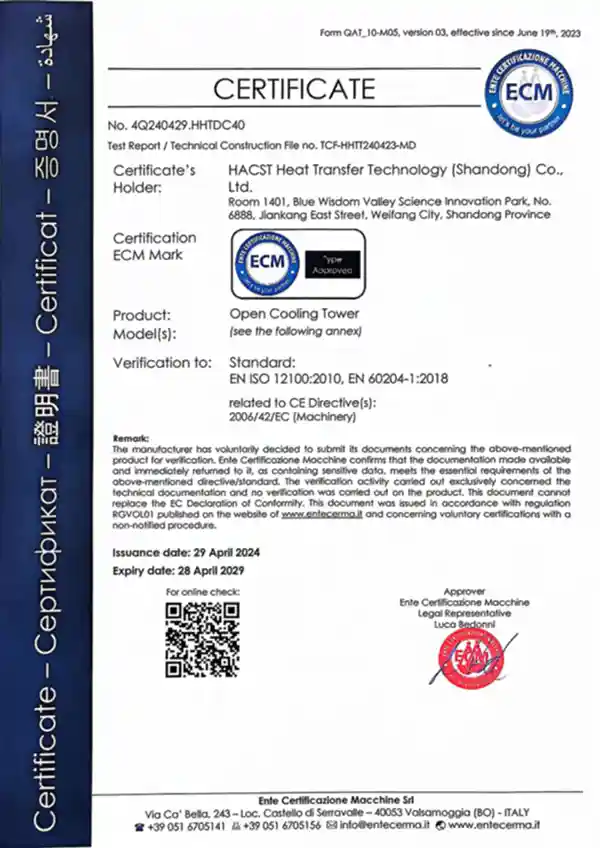
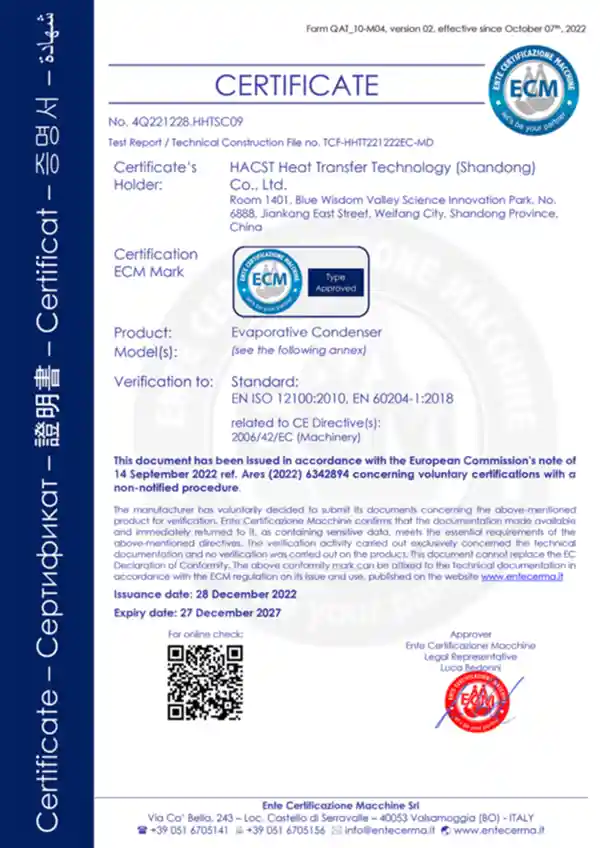
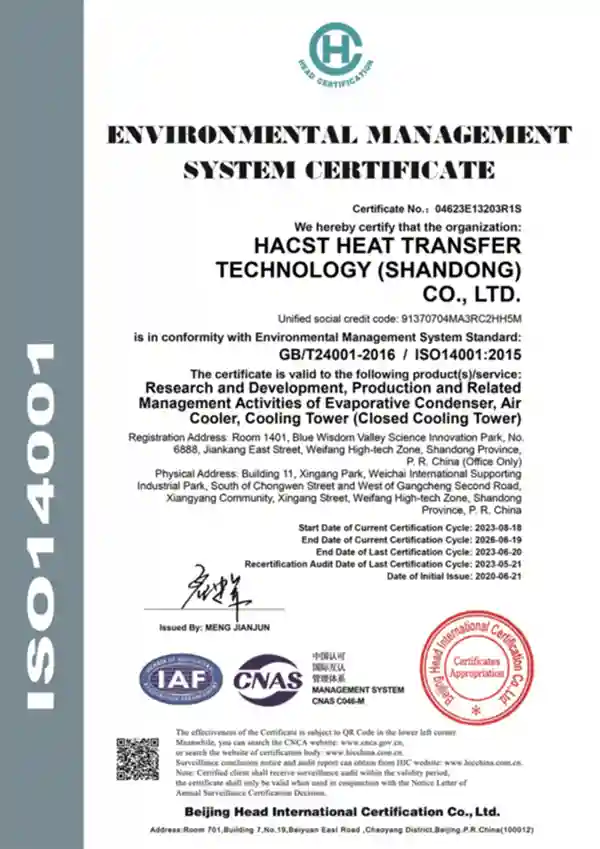
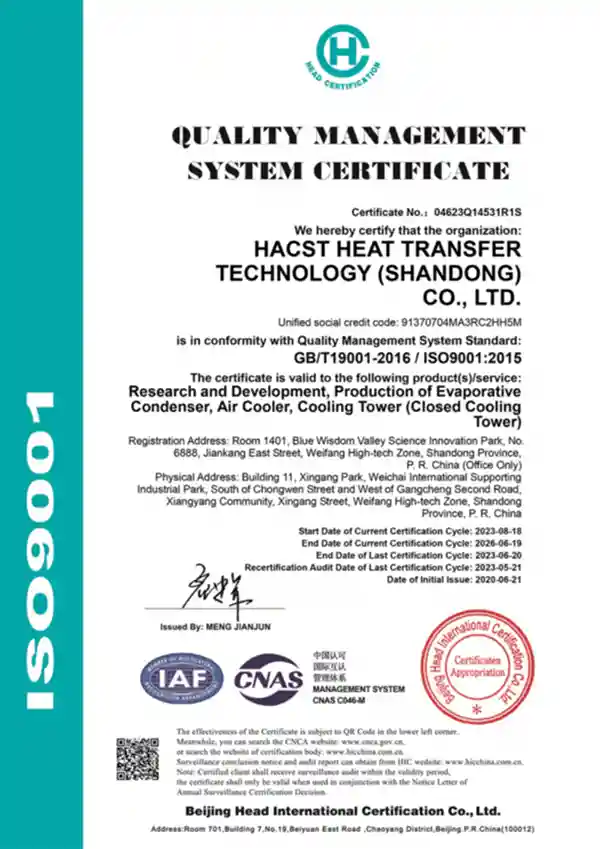
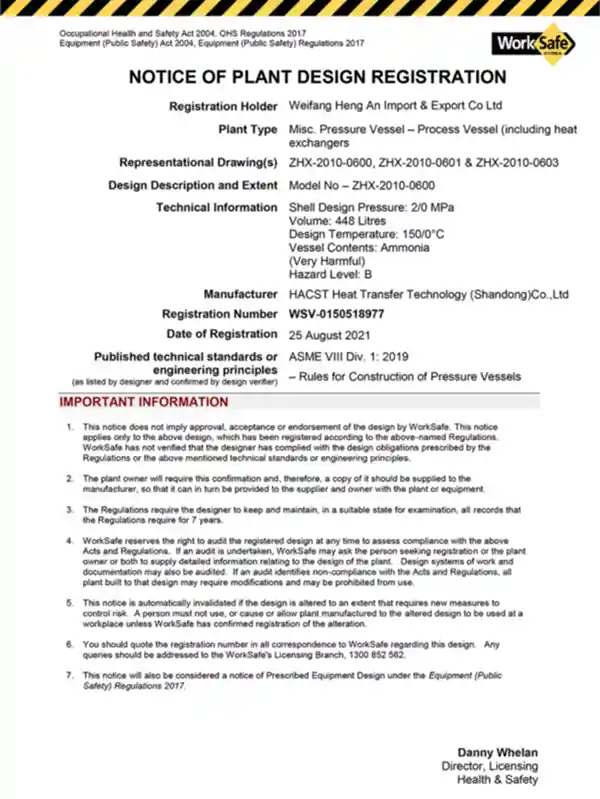
Internationally certified: ISO9001, ISO14001, ISO45001, CTI, CE, TÜV, BV, SGS, AS1210, and more
Professional international trade team of over 40 members, fluent in multiple languages
Full support for standard and highly customized solutions (OEM/ODM)
“HACST” and “Hengan” brands are well-recognized worldwide. Our equipment has been exported to over 100 countries and regions and serves as a trusted partner for global companies such as Coca-Cola, Mayekawa, Emerson, SRF, Hamon, and many others.
With strict quality control and comprehensive after-sales service, we are committed to providing reliable, efficient, and eco-friendly cooling solutions.
Welcome to contact us for inquiries or customized requirements. HACST looks forward to being your long-term partner!
Our Customers
Our Certificates


Some of Our Projects
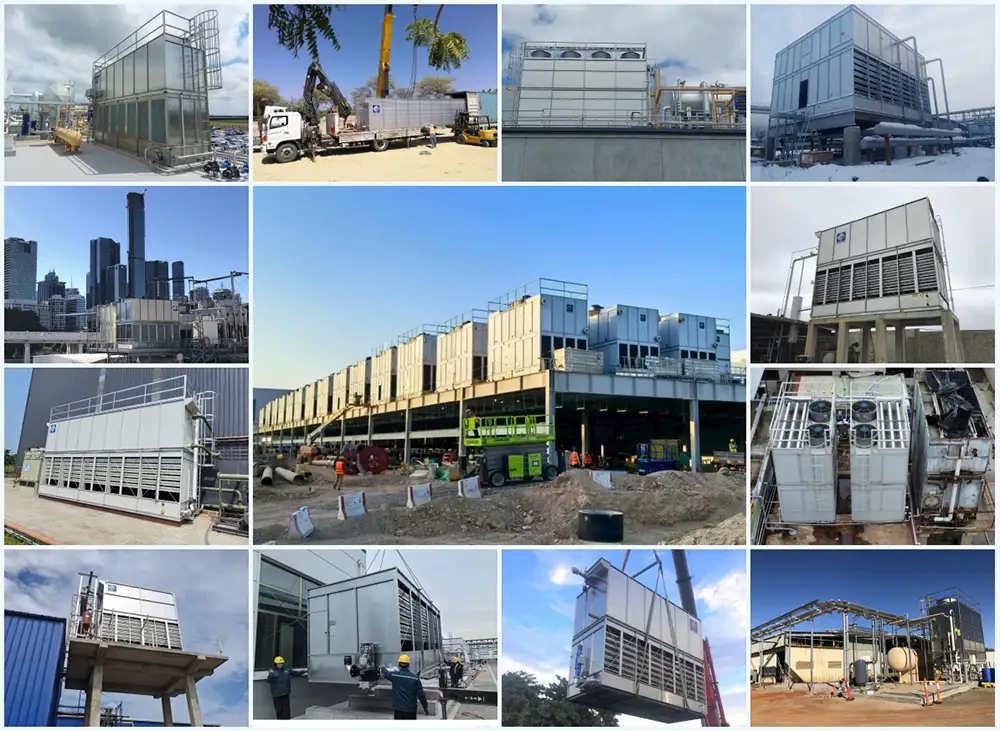
Evaporative Condenser Selection for Industrial Refrigeration
An evaporative condenser rejects refrigerant heat through a coil, spray water and airflow in one package. It is widely used where compact layout and stable condensing performance matter for ammonia, CO₂ and industrial refrigeration projects.
Data to Confirm Before Selection
| Project input | Why it matters |
|---|---|
| Refrigerant, capacity and condensing temperature | Defines coil duty and required heat rejection. |
| Design wet-bulb temperature and site climate | Sets the evaporative operating condition and seasonal margin. |
| Water quality, material and maintenance plan | Guides coil protection, water treatment and service access. |
| Noise, footprint and controls | Shapes fan selection, layout and VFD control strategy. |
Engineering Considerations
Compare coil material, fan arrangement, drift control, water treatment, winter operation and access space together. A lower condensing temperature can reduce compressor energy, but the final selection should balance annual operating cost, water strategy and maintainability.
Can an evaporative condenser be used with ammonia?
Yes. Ammonia systems are a common industrial application, subject to the refrigerant circuit, code requirements and project-specific selection.
What affects condenser capacity?
Refrigerant duty, condensing temperature, wet-bulb temperature, coil design, airflow, water distribution and fouling allowance all affect capacity.
How should water use be managed?
Plan water treatment, conductivity control, drift elimination and seasonal operating logic with the equipment selection.
When should a project use a different heat-rejection system?
Compare process requirements, water availability, climate, refrigerant, maintenance capability and life-cycle cost before deciding.
Send refrigerant, duty, design conditions and site constraints for an engineered recommendation.
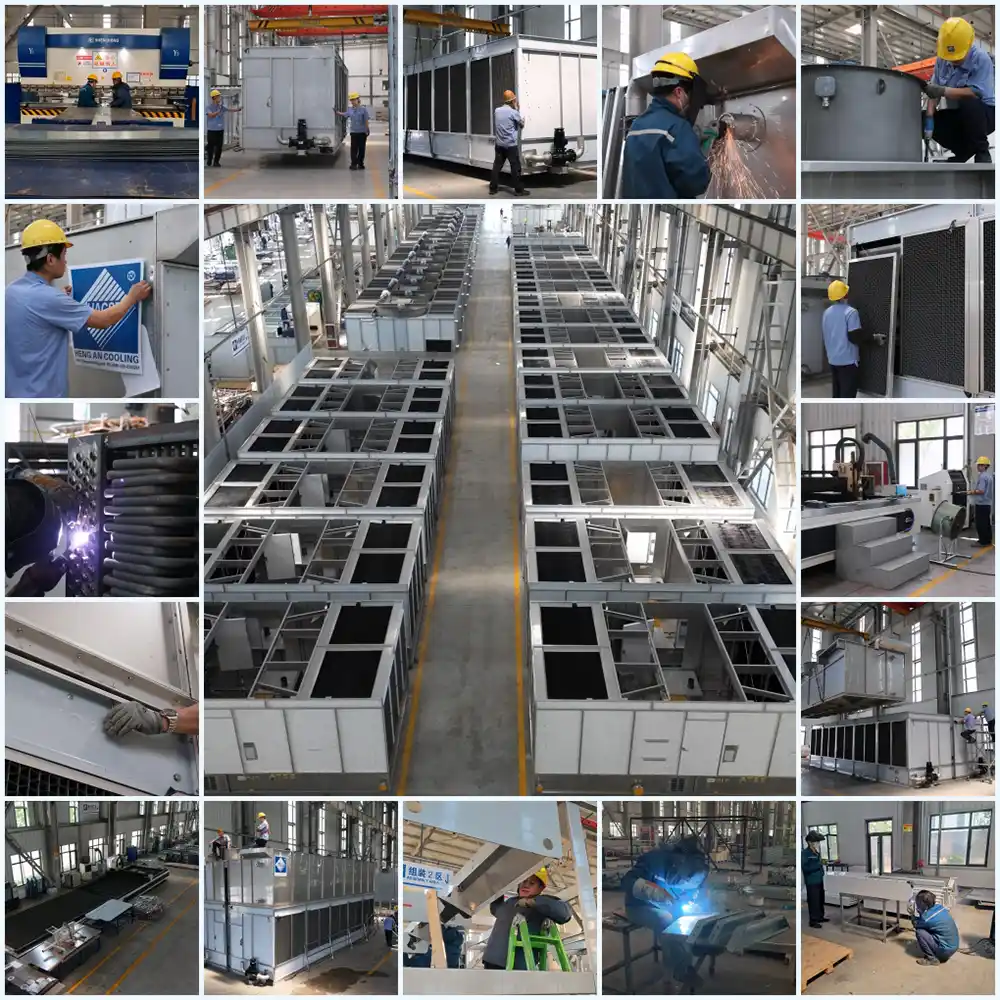
Our Workshop